What Happened to Kate on This Is Us
Follow u.s. wherever you lot get your podcasts:

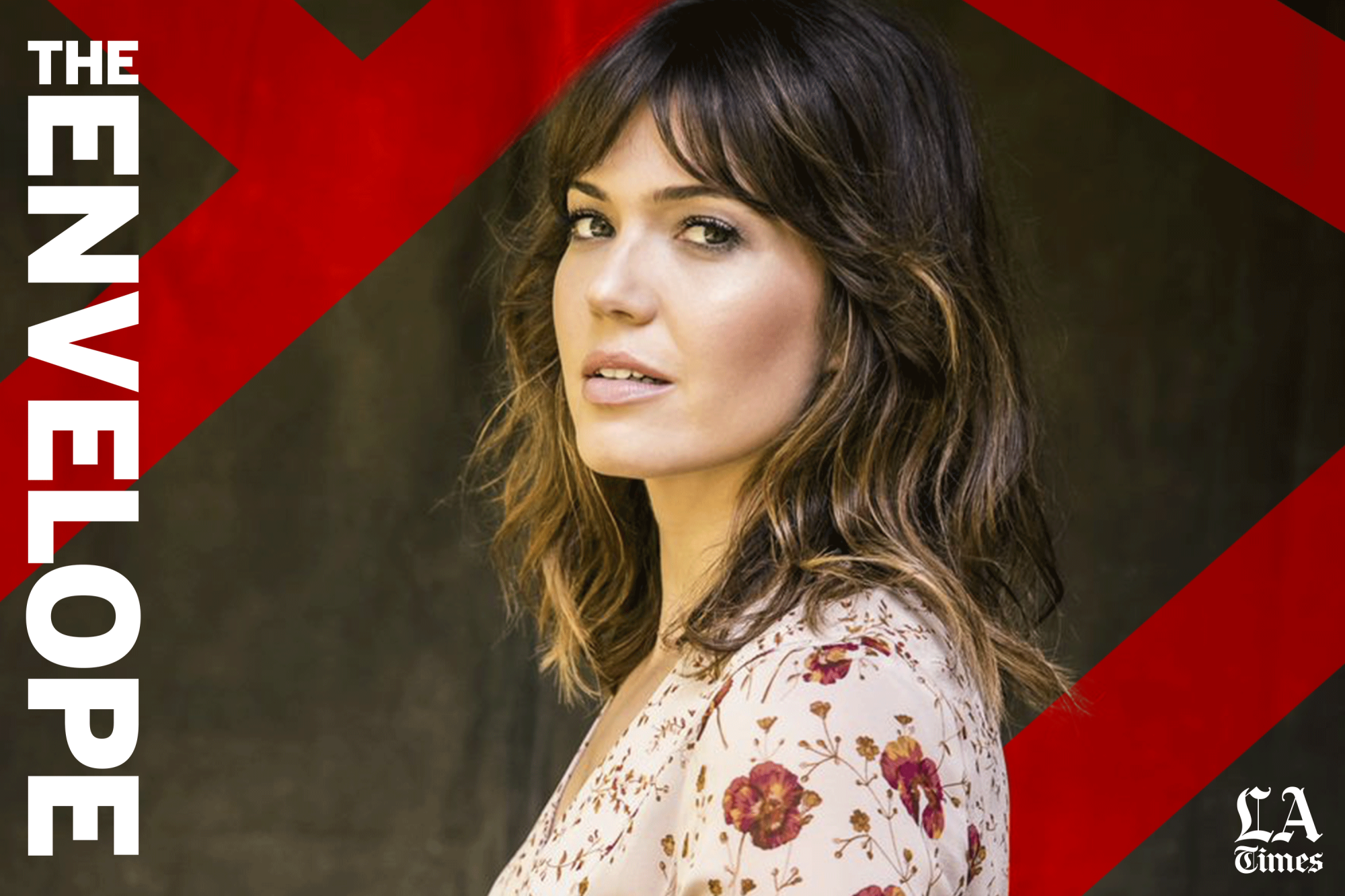
Mandy Moore reflects on the shocking Pearson family conversation in the latest episode, "Taboo," and teases what's coming up every bit the "This is Us" series finale nears. (Hint: Big Three trilogy episodes, Kate and Toby'south relationship, Rebecca's final adieu and a pastrami sandwich.) Plus, what you can wait from her directorial debut, her parting words for Rebecca Pearson and a blast from her by popular star life.
Alert: This story contains major spoilers from the "Taboo" episode of "This is Us."
Yvonne Villarreal: Hi, I'm Yvonne Villarreal
Mark Olsen: And I'g Mark Olsen. Yous're listening to "The Envelope," The 50.A. Times podcast where we go behind the scenes with your favorite stars from Tv set and Film.
Villarreal: Mark, I can't believe we're already at the cease of this flavor.
Olsen: I know! It went by so quickly. Nosotros are going to be back shortly with a special Oscars episode, but, Yvonne, do y'all know the not bad thing about podcasts?
Villarreal: No, tell me, Mark.
Olsen: Yous can go dorsum and heed to them whenever you want! If you haven't already heard previous interviews — or even if yous have — I would suggest Yvonne's conversations with Issa Rae or Jennifer Coolidge, or my talks with Maggie Gyllenhaal or Ahmir "Questlove" Thompson.
Villarreal: Great suggestions, Marker. Today's guest, Mandy Moore, is also nearing a flavor finale, but it's a much more emotional one for her as it volition likewise be the end of the route for "This Is Us." Exercise you watch the show, Mark?
Olsen: I'm not a regular viewer of that evidence, but I know that information technology has a huge fandom, and this finale is much anticipated.
Villarreal: Yep. You lot should come over. We can weep into each other's arms. The show was created by Dan Fogelman, and information technology'south well-known for its plot twists and tear-jerking moments, and this evening's episode was no exception. If you haven't seen it all the same, I will merely note that the outset part of this interview will comprise spoilers. You've been warned!
Anyway, as "This Is Us" fans already know, the show'south plot jumps around in fourth dimension to tell the story of the Pearson family unit, and the episode that just aired takes place over a few Thanksgivings. In the present solar day, Mandy'due south character, Rebecca, is in the early stages of Alzheimer'due south illness, and reveals a bombshell. She and Miguel have started planning for her end-of-life intendance.
[Clip from "This is United states of america": REBECCA: The one silvery lining of this atrocious affliction is that I have the opportunity to brand a program, to try and ease some of the burdens. So, get-go things kickoff, no thing how this thing goes, no matter how slow or fast, if decisions need to exist fabricated for me, Miguel is the captain of that ship.]
It was such a touching moment and a corking performance past Mandy, and then nosotros started there in our conversation:
Villarreal: Mandy, cheers so much for joining us.
Mandy Moore: Thank you for having me.
Villarreal: That moment with the kids and Miguel was so emotional. I hateful, Rebecca's confronting her fate and kind of merely dropping this big news on the kids. What was it like for you to shoot that scene?
Moore: Yeah. In typical "This Is U.s.a." manner, Dan loves to write a monologue. And this was a doozy of a monologue. Information technology was three or four pages. Information technology was ironically right before our Thanksgiving vacation, and I remember just thinking, "Oh, I really want to nail this. I really want to get this off my plate. I'm so nervous." There was just so much to say coupled with, apparently, the identify that Rebecca finds herself in to have this item chat with her children. I think it's something she'due south been thinking about for a long time, and it'southward not as well often that they're all sort of gathered in the same place.
So it was emotional knowing that the end is near in every mode — for this woman, for our show, for us as friends and colleagues. And so it was pretty easy, and accessible to tap into the emotions of what Rebecca was dealing with. And I take the incredible opportunity and souvenir of looking at Sterling Yard. Brown, Chrissy Metz, Justin Hartley and Jon Huertas in the eyeballs as I get to say these beautiful words. That makes my job exponentially like shooting fish in a barrel.
I feel like this is the beginning of this last chapter for Rebecca. I think she is well aware of her fate, well aware that this is the moment to be very intentional with her wishes and with her kids. It'due south a challenging conversation because she knows that she'due south going to hurt the feelings of the two other children that weren't chosen to be the executor of her estate, if something were to happen to Miguel. Namely, Randall. Just luckily you'll come across in future episodes, they find a way to have a conversation and hopefully bring a little bit more than clarity and understanding as to why she reached that decision.
Villarreal: Yeah. I wanted to explain to our listeners that Rebecca chooses Kate as the person to make decisions on her behalf if Miguel is no longer with u.s.a.. Kate is very surprised and asks Rebecca, "Why me?"
[Clip from "This Is The states": KATE: I gotta ask, why me? What? REBECCA: Y'all are my daughter and my all-time friend. It was always you, Kate.]
Villarreal: For you, in what ways has it always been Kate?
Moore: I think the viewers of our series from the showtime accept understood that Kate and Rebecca have always had a chip of a tumultuous relationship, and they've never quite been on the aforementioned folio. Kate has had her own baggage forth the manner, and I think Rebecca, equally a female parent, has always been flummoxed by the fact that they just can't seem to meet in the center for almost of their lives. And the irony is that this life-altering diagnosis of dementia and Alzheimer's happens to sort of coincide with Rebecca and Kate really finding their ground and finding this common ground. I retrieve it'southward pretty heartbreaking and devastating for both of them to recognize that they're just finally understanding each other and getting along, and at present this is what's unfolding. This is what's in front of Rebecca. Only, I think Rebecca has always been a champion for Kate and even in the midst of not quite grasping why Kate is so angry, Kate has then much resentment toward her. Think Rebecca still, equally well-nigh good parents are, merely gonna sort of be on the sidelines waiting for things to sort of come effectually.
Villarreal: In the premiere of this season, Rebecca struggles to recollect a core retentiveness of her equally a child riding a railroad train with her dad, and you tin can encounter she's really sort of tormented by the reality of what's slipping away.
[Clip from "This Is Us": REBECCA: And then when we would become close to the urban center, he would walk me to the very front of the train, and we'd walk dorsum through each and every car. All the way, all the way back to the…them um… the last machine. No, no. Don't tell me…]
Villarreal: What has playing this stage of Rebecca'south life taught you about memory, what we concord on to, and living in the moment?
Moore: Memory is the mucilage of everything. It'south the gum of our lives. It's the glue of this show in particular, and I recollect the thought of staying nowadays is ane of the more difficult parts of the human condition for all of us. I love that this show is a reminder of that, of this most precious thing merely sort of floating away, floating, out of accomplish. It's beautiful to have that reminder.
Not to go on bringing it back to the show, and, selfishly, my feel as an histrion on the show, but this has been the all-time job I've ever had in my life, and I've been doing this for over 20 years. This is an opportunity that never comes around for near people, to exist a office of something that fires on all cylinders in the fashion that the show has, the connectedness that the audition has with the material, the friendships we've all made, the story we get to tell. It just checks every box. And in that sense, I think we knew how special information technology was and how of import information technology was to stay present. It'due south virtually ironic, that lesson is something that nosotros've all been sort of trying our very best to understand and to put into practice from the beginning.
Villarreal: Well, I'm sure you've encountered fans of the prove who have known people with Alzheimer'south. What'southward it been similar to hear people'due south stories and how the prove has touched them?
Moore: Like many other subjects we broach on the show, people really feel seen. I think caregivers and loved ones who have loved ones living with this awful, insidious disease, it'due south very buoying for them to run across themselves and see their families, and not just what their loved ane may or may non exist going through, but the families as a whole. What they're collectively grappling with, the decisions that they're making, the differing decisions, that one family fellow member wants to handle things one way and others are really interested in making sure that their loved one is enrolled in a clinical trial. Others want to sort of respect the wishes of the person who's living with this diagnosis. It's really catchy, and I think as the story goes on in that location will exist a lot more than of a focus on Miguel as a caregiver and how strenuous and stressful that is.
Villarreal: I know you lot weren't a mother when you began your journeying as Rebecca Pearson. I call back us talking and yous sharing how Milo had to sort of teach yous how to change diapers. Just now you are a mother. Has condign a mom enhanced your agreement of Rebecca? Take y'all noticed any shifts to how you lot feel her through your performance?
Moore: Yeah. I like to joke that I would love to go dorsum to the starting time of the bear witness now, because I'm similar, "Oh, I accept some inkling of what information technology means to be a mom, to love your kids with this ferocity." I hateful, I had some clue, but no real point of reference as to merely the depths of the love and the loyalty and throwing yourself in front of a moving vehicle for your family. I have a deeper well to depict from. Information technology's not just my imagination. There's a reality. There'southward my lived life that I'm able to bring to the table, as you lot as a performer with any medium. You bring your life with you. You bring your experiences with y'all. And at present I have a twelvemonth's worth of what it means to be a mom, and I'll exist able to carry that with me for the rest of this evidence and everything moving forward.
Villarreal: Now I'1000 curious, which moments in particular from the by seasons do you think y'all would have brought something different to?
Moore: You know, some of the decisions that Rebecca made that I didn't necessarily agree with. Namely, let'south say Randall and William and keeping the ii of them apart.
I was very steadfast in the thought of like, information technology'due south wrong, and I can't even imagine how this woman would come to this decision that this was the right pick. Just being a parent now, and the thought that the abject fear in your child potentially not beingness yours anymore, it's unimaginable. I think filtering in a fleck more than of the empathy and the compassion that I didn't necessarily have for her in some of those moments that I disagreed with her on that I feel similar it would merely add a little bit of a different shade. I don't know. Perhaps it wouldn't even be perceptible, but it would be for me when I'm bringing to the table.
Villarreal: Yeah. I get that. Well to transform into older Rebecca at that place'due south hours worth of makeup and prosthetics that you have to sit through. I know it'due south been some time since y'all've done it, but the start times that y'all did that transformation, did you notice any alter in the way you lot were treated when yous were in costume as older Rebecca?
Moore: Non so much in nowadays-twenty-four hour period Rebecca, but the few times that I take transformed into the time to come version of Rebecca, when she'southward closer to the terminate of her life, people actually treated me like I was an 85-year-sometime woman. Everybody got really quiet on set, people were at that place to help shuffle me in, similar I couldn't get at that place myself. That was a bit foreign to me.
I estimate in the sense that I know Sterling and Justin and Chrissy, apparently, outside of work, but when I'm on set with them, they know me as mom. So I think it'south foreign for them to encounter me outside of that makeup and cross paths with me on ready, or in pilus and makeup or something like, "Whoa! I don't know this version of y'all." And then, there's a relationship, there'due south a linguistic communication that nosotros take as mother and child that'south kind of this unspoken matter that we built up over the terminal 6 years. So in that sense, yeah. I experience like they do care for me differently. I'thousand not 5-years-younger-than-them Mandy. I'm similar ...
Villarreal: It's still so wild that you're similar the youngest of the adult cast, merely you lot're playing the oldest. So baroque.
Moore: Yeah. it is.
Villarreal: I imagine you lot've brought your son, Gus, to prepare. Has he sort of observed you in that stage of life every bit Rebecca? Is that weird for him? Like, is he just looking for your vocalization?
Moore: He recognizes my vocalisation and my odour, but yep, I remember him coming to set with me very early, like when he was a month old and I retrieve to go through the makeup process. It was very confusing to him at start. Afterward he's gotten a scrap more than used to it, only all of the wigs are foreign to him. But once more, he'southward sort of cued past my vox. So he's like, "Oh, OK." I joke that information technology's similar Grandma Mom when I'm in my aged makeup. And specially when I was nursing him, I was like, "This is definitely going to exist cause for therapy somewhere down the road for him." But you know, this is my job and I'm only grateful that he can come and visit me. Merely yeah, information technology was definitely weird at first.
Villarreal: When he'due south older and finds those photos, information technology'due south going to be a treasure for sure.
Moore: Totally. For sure.
Villarreal: The show touches upon some primal fears that we all have — or possibly it's just primal fears that I have: the loss of memory, the fear of death. How practise you feel about dying on screen? I hateful, nosotros didn't see Jack die per se. We saw your reaction to seeing him. Exercise you have a sense of if information technology'll sort of become that way with you or if we're gonna see it?
Moore: I know how information technology'south all gonna happen, and information technology'due south going to be a lot, just I remember people will be very … "pleased" is such a weird word to describe with like, "You're going to be pleased with how she dies." I retrieve fans of the testify, those who have been on this entire journey with us, volition feel like it is a very fitting way to tell the end of that story, and the story, just in general, of the whole show.
Dan excitedly has been telling us from the beginning [that he] has chronicled every single chapter or exciting thing that happens forth the style. And, we saw him possibly a week or so ago and he was like, "Hither'southward what'southward happening in these last like three episodes" or something. And we were all sitting at that place crying and I was similar, "It's too much," simply it'south also perfect. It's exactly what it should be.
Villarreal: Well, the upcoming 3 episodes are interconnected, and you and your co-stars, Milo Ventimiglia and Justin Hartley, will be directing them. What can you share with u.s.a. virtually what'southward in store with this trio of episodes?
Moore: So, we've washed this twice earlier on the show. I recall in the second and fourth seasons nosotros've washed these sort of trilogy episodes that all sort of bespeak to a dissimilar character's perspective. So, Milo's directing Kevin's episode, I go to straight Kate's episode, and Justin directs Randall's episode. And there are interconnected points of these episodes that have happened in trilogies of the past, which made it somewhat challenging to be an actor and a director in some of these scenes. Namely, there's similar a part of the episode that takes place at this pool that we've gone to equally a family several times. And then there's the thought that Milo and I are in bathing suits with seven-year-old kids and like lxxx extras all the manner in Long Embankment. It'southward freezing. Information technology was raining one 24-hour interval. We're in and out of the water. It was like all of the most challenging aspects of existence a offset-time managing director were sort of thrown my way. Simply luckily we had Justin there to sort of go on a bird's-middle view of similar, "No, no. You got it. You lot can move on," because our evidence, nosotros merely don't have time to do a scene and and so stride aside and go sentry playback on the monitors. So we kind of had to rely on Justin and rely on yourself like, "I experience good near my performance. I think we got it."
Villarreal: What was information technology like to directly your cast mates who y'all've been acting alongside all these years? Who was the clown?
Moore: Well, my episode is primarily Chris and Chrissy, and I knew that Chris is, you lot know, he's i of the funniest people that you volition e'er meet in any walk of life. So, I knew I was in for it with him.
But I experience like what was actually revelatory for me was — I know how bully everybody is on our crew. We've retained about of our coiffure, I'd say like 98% of our crew from the very, very beginning. I knew how good everybody was at their chore, just I didn't know the extent. And I retrieve as a director, having the process of going through prep before your episode, shooting, and then going through the editing process and the postal service-production procedure. Everybody on our testify is just and then infrequent at what they do.
And as an actor, I will never ever take for granted anything from locations to transpo, to groundwork actors and props. And you sit down equally an thespian, and yous're eating a pastrami sandwich and I've never really taken the time to realize like at that place are seven meetings that get into "What kind of bread is it? Is turkey pastrami? Is it regular pastrami? Is it toasted? What kind of cafeteria? I mean, simply similar every unmarried possible question you lot could have about a pastrami sandwich, similar has been answered, has been addressed. "..the logo of the deli. Are there potato fries on the side? How many patrons are in in that location?" There's so much groundwork and legwork that goes into information technology that y'all think nearly, but until being in the manager'southward chair, I really just couldn't totally accept and process.
I experience similar in a way, every actor should at least have the opportunity, not necessarily to direct, simply at least shadow the director'south procedure, because information technology opens up a tremendous groundswell of respect for every single coiffure fellow member and what they exercise and what they contribute to make a show what it is.
Villarreal: Then are you lot telling me there's a pastrami sandwich in your episode?
Moore: Non in my episode, but Justin's episode. I eat a pastrami sandwich, and as an role player, I was like, "Oh, wow. At that place were probably several meetings that Justin sat in, where they talked nearly this pastrami sandwich."
Villarreal: And I'm certain part of that is considering viewers sentinel every part of this show for clues. They dissect everything. Maybe this pastrami is a clue for something, who knows? But could you lot see more directing in your hereafter? What else would you lot want to straight?
Moore: If I should be so lucky. Absolutely. I think I would love to straight things again, that I have a personal connection to. I don't think that I take this skill set to just be a director who onboards a show that I'm not necessarily familiar with. I had the advantage of working on the bear witness that I know intimately. I know these characters intimately. I know these actors intimately. I don't have the feel, at least at this signal, to jump onto something that I feel like I wouldn't have that same connectedness to. You just accept to care so passionately.
I heard someone mention "The director's job is throwing the party, whereas an player's just an attendee." Y'all're just attending the party, and y'all tin can leave at whatsoever time. Simply the manager has to pay attention to all the details. You're there to the biting terminate. So information technology would have to be something that I feel then drawn to, and so compelled by. Hopefully that'south something that I personally work on adjacent, only existence able to work with these actors is kind of similar cheating every bit a director.
I had this crazy, crazy epiphany watching Chrissy and Chris, in item. In this episode, there'southward a lot that sort of happens. I've worked with them for six years. I know how extraordinary they are at their jobs, but there was something different nigh sitting behind that monitor and not being in a scene and not just sort of connecting with them and their eyeballs in the moment. Just watching the piece of work from that vantage point, from that distance that blew me away. They are only and so truly adept at what they do. And once again, it only didn't feel fair to call myself a managing director considering I'm like, I didn't I really do annihilation.
Villarreal: I feel similar that's going to be quite the episode if I assume it's going to go where I recollect information technology's going. So, what an episode to direct.
Moore: Yeah. it's starting to explain things to the audience, to all of united states of america, like what happens with Kate and Toby. It'southward a really beautiful one, and Chrissy co-wrote it. And so it's fifty-fifty more special that I got to exist a part of helping tell this story. So much of it is from Chrissy's heart and brain.
Villarreal: OK. I want to take things back a flake. Your introduction to acting really began with your music videos dorsum when MTV was the go-to destination for that sort of thing. And they are stored in my memory, but I did rewatch a lot of them.
Moore: Oh no.
Villarreal: I mean, y'all were xv when you lot did "Candy." What practice you think about existence on the set of your first music video?
Moore: So excited to become through this silly process of pilus and makeup and wardrobe. All the girly things, because equally a 15-twelvemonth-old, what's more than exciting than a rolling rack of clothes that aren't yours and an array of glittery eyeshadows and sparkly lip glosses. All of it was just like a shopping spree at the mall come up to life.
I'd never been a part of something where things were sort of catered to me. I had been in theater productions where I was a fellow member of a troupe, a cast member of a show telling a story, or in a commercial where you're i cog in the wheel of the machine of what you're trying to sell. It had never been about me and being the center of attention was difficult to go used to, merely as well only tremendous. Again, equally a 15-twelvemonth-old, it's like, "Wow, I got to live out my dreams of simulated driving a machine and having a cute boy look twice at me," like things that weren't necessarily happening in my real life.
But I don't know how I knew what to do, necessarily. I guess you only sort of mimic what you saw in other music videos and on MTV. Again, I was a 15-yr-erstwhile girl singing near missing someone like candy and I had never French-kissed a boy before. So it'south foreign to recollect I'm singing about things and trying to sell something that I really knew nothing about.
Villarreal: You had never missed someone similar candy yet.
Moore: Correct. Unless nosotros're talking nigh actual candy, like SweeTarts, then sure. I could tap into that."
Villarreal: Well, it's funny, y'all brought up sort of mimicking or looking at other things because, as I said, I rewatched them and I couldn't help but notice how much sass and confidence you are giving in that "Candy" video. How much of that was what y'all felt like you needed to deliver versus what the director was mayhap explicitly telling yous he wanted from you?
Moore: I don't recollect the manager telling me that he wanted annihilation from me. That I feel like that all but came instinctually, which again is strange, considering it'southward not who I am merely naturally as a woman. I'g quite shy. I'm quite introverted in my real life. Only I guess, as a fearless immature person who feels like they have zip to lose and you don't know what yous don't know — I think the same thing about that time period of performing, of being on phase and opening up for the Backstreet Boys or Nsync with a sea of twenty,000 girls with glow sticks. And I never actually was nervous. I was merely excited for the opportunity.
Now I would poop my pants. I would completely lose myself. I would be so nervous. So I think that the sass and the confidence only came from like owning the moment and owning the opportunity, and once again, mimicking what I'd seen in other videos and like, "This is how you perform in a music video. This is how yous sing to the camera and lean in." And I really didn't know what I was doing quite bluntly.
Villarreal: Well, similar, as y'all mentioned, you came of age at peradventure one of the hardest times for teen girls in the media. You lot arrived on the pop music scene at 15 years old in the belatedly '90s, and your contemporaries are Britney Spears, Christina Aguilera, Jessica Simpson. At that age, did you have an sensation that you were expected to sort of have on a sex symbol persona?
Moore: I knew that I was manifestly like my tape characterization's reply or a version of those other women, but I also was aware that nobody was pushing me to be somebody that I wasn't. I was immune to kind of just be a fifteen-year-old was actually a fifteen-year-old girl, and I wasn't trying to act older than I was. I was still very much allowed to be a child. When we would perform at theme parks, I'm like, "Ooh, tin can I continue some rides?" If we're performing at a mall, like, "Exercise I accept time to become to Auntie Anne'due south Pretzels and go to Claire's and look at jewelry?" I wanted to go shopping. I wanted to go to the mall with my friends, go see movies and go out to dinner. The typical things y'all would be doing at 15, non kind of leading a more mature life than would be appropriate for someone my age.
Villarreal: A lot of people are revisiting the unhealthy handling of women in the media in the early on and mid-2000s, and that obviously overlaps with your time in the music industry. How does it experience to be part of that chat or to even run into that chat happening?
Moore: Well, I'chiliad happy that the conversation'south happening. I feel oddly excluded from information technology because my time in the music industry or at least feeling, even a part of that conversation or somewhat relevant, feels and so fleeting. We're talking about women who had but exponential success, success I could never fathom or wrap my head around. And therefore the consequences of the choices that they've fabricated or people around them fabricated for them, on their behalf, I quite frankly couldn't imagine and I have so much empathy for [them]. I'm glad we're able to talk almost it now and talk about why it was so wrong and misguided, and hopefully how that will never happen again.
Villarreal: To get back to what you mentioned earlier, it wasn't long into your music career that you lot branched out into films. Yous made your debut in "The Princess Diaries" in 2001. How did that come most? Was that your team trying to notice ways to distinguish y'all? Were y'all finding that maybe this is something I desire to pursue? How did information technology offset?
Moore: I ever knew that I wanted to effort my hand at acting. I had grown up as a theater kid, kind of doing a little fleck of both. Then when the music stuff took off to a varying degree, information technology kind of opened doors for me to try my hand at acting. I had gone on several auditions and had been meeting people, and I remember reading the script for "The Princess Diaries" and going to meet dear Gary Marshall at his theater in Toluca Lake, and I had just a fantastic meeting with him. And so getting the word that they wanted to cast me as Lanna, Lana, whatever her name was and that film.
That was sort of a lightning commodities moment for me. Like, "Wow, I dear this. I honey this way of storytelling. I love that the onus isn't solely on me." I was around a bunch of other actors my age, and it felt like summer camp. So over again, that kind of opened the door for more opportunities. Then I remember reading the book for "A Walk to Remember," so getting the meeting with Adam Shankman and and then eventually kind of doing a pseudo chemistry read with Shane W and with Adam, and somewhen getting cast in that project. I kind of got the brawl rolling from there, I guess.
Villarreal: 20th anniversary for "A Walk to Remember" this twelvemonth.
Moore: So crazy.
Villarreal: So crazy.
Moore: I remember, I think Jessica Simpson auditioned for it. Y'all'd accept to ask Adam as to why I was the ane that got cast, because I didn't know what I was doing, truly. I didn't know how to hit a mark. I didn't know what a mark was. Poor Shane was really having to sort of agree my hand and guide me around. I didn't know what I was doing. I wait dorsum and I'1000 similar, "Ay, ay, ay." It's probably a hard ane to scout. Only, I was so sad when it was over and simply thought I'll never, e'er accept an experience like this again. And it kind of was true. Maybe information technology's simply because it was the offset of its kind, and so information technology e'er would hold a very special place in my heart. It really wasn't until "This Is Us" that I was like, "Oh, I feel like I'm borer into a very similar vein there. I remember what it's similar to be a part of something where you're similar, 'Oh, this is special.'"
Villarreal: But why does it ever have to involve you lot dying, Mandy?
Moore: I know, and crying. No more. This is it. This is the end of crying for me.
Villarreal: But back to those early years of acting, how into it were you then? Did information technology create confusion for your own goals? Like, "Expect, I wanted it to be this music star. Is this keeping me from giving it a more concerted shot?" Were yous ever worried you lot were not feeding the other passion by feeding the other one?
Moore: Oh, no, I never felt that way. I loved that I somehow was allowed the opportunity to do both, and I recall other folks in my position weren't afforded the aforementioned opportunity maybe because of the level of fame that they had achieved. I retrieve it allowed me to kind of go under the radar a little fleck and for people to maybe buy me on screen or in character, because they didn't know as much about me and my life and all of the trappings of beingness a megawatt celebrity.
So, I loved doing both and I loved that a lot of the projects somehow immune me to still dip my toe into music, or in that location was some sort of relationship to music. Whether it was "A Walk to Remember" or even "Princess Diaries," I got to sing even so. I ever establish my way back to music. I'd notice a way to make a record at the aforementioned fourth dimension.
I never actually got to tour or practice anything, to that caste that I probably would have liked or sort of idea at the beginning of things, only I was having too much fun. I loved that one chore led to the next led to the side by side led to the next, and it allowed me, you know, 20-some-odd years after to all the same exist doing it.
Villarreal: Well, you've acted alongside some heavyweights similar Diane Keaton in "Considering I Said So" and Robin Williams in "License to Wednesday." When y'all got to that stage in your career, did you experience that people started to take you lot more seriously equally an actress, or started to think of you as an actress rather than a pop star?
Moore: I'm not certain those films in particular made people take me seriously, merely I recall that people did view me — strangely, probably subsequently "A Walk to Retrieve," as silly as information technology sounds, considering of the story we were telling the fact that I colored my hair brown from being a blond, yous know, those things, allowed me to sort of seamlessly transition to that side of my chore a little easier. It did let people to see me in that light, and I don't think that I really ever had the difficulty of trying to explain to people moving forrad, like, "No, no. I'm not only a musician or a singer. I'm also an role player." I retrieve people sort of started to see me in both of those roles.
Villarreal: What well-nigh yourself? Did you have any sort of impostor syndrome? I feel like all of us do, but how did you sort of work your way through that?
Moore: I notwithstanding practise. I still take impostor syndrome. I don't know if I ever desire to go to the point where I don't experience like I don't vest or I'chiliad not trying to fake it. I never want to get besides comfy. I'k happy to sort of exist kept on my toes. I've never gone to work in these concluding six years on automatic pilot. I always bulldoze through those gates of Paramount thinking, "I cannot believe this is my job. I can't believe someone's letting me exercise this. I can't believe I'k about to get work with Sterling, and I'g in a scene with him playing his mother and I'm 37." It'due south just never lost on me that this is wild and incommunicable, and "how did I get hither?" and "How exercise I go on this going" and "This is going to be the last fourth dimension I ever piece of work." I mean, just a million things, but I'g kind of fueled past that. And so I promise that's e'er the case.
Villarreal: Well, when "This is Us" came along, y'all were at a crossroads, at a turning point in your personal and professional person life. Yous had washed a few unsuccessful airplane pilot seasons and yous were at the end of a human relationship that yous described equally one that damaged your sense of self. With a chip of altitude, how do you feel you've inverse since starting the show?
Moore: Yeah, my life looks impossibly unlike now in every way. it's unrecognizable. I think in all the ways that I only mentioned. I accept better boundaries. I know myself meliorate. I'm more apt to say "no" and be less of a people pleaser. I recall especially becoming a parent farther instills all of that. You lot are and so happy to do whatever information technology takes to protect your child to protect your time and your free energy.
I feel like having the incredible fortune of being a part of something that you lot are and then deeply moved by and challenged by in every way has helped me think most the hereafter and the kinds of things that I really want to dedicate my fourth dimension and energy toward, in terms of the professional side of things. I think there are different qualifications now, and I empathise the privilege that comes along with that. And maybe at some signal I'll accept to sort of toss a lot of that to the side and but go, "I'm happy to take whatever chore," but I feel lucky to be in the position where I would love to wait for something that feels right to come up along instead of just jumping at whatever opportunity just out of fear of non knowing when the next thing is going to come along. Because being with my family'southward too important, existence a part of something that really fires on all of those cylinders, that challenges me emotionally and physically every bit a human and as a performer — like I want to work with great people. I want to do things that scare me. I want to keep raising the bar for myself. so I don't know what, what that is and what that looks similar necessarily, but I'm excited to see information technology through and figure information technology out.
Villarreal: Well, related to that, "This is United states of america" is undoubtedly a pivotal landmark moment in your career. I mean, you lot've earned a Golden World and Emmy nominations, as well equally two Screen Actors Gild awards and a star on the Hollywood Walk of Fame. I know we were talking virtually impostor syndrome, merely what have you learned virtually what you're capable of from doing this bear witness?
Moore: Along the lines of what I was but mentioning, it's proficient to scare yourself. It's good to sort of put yourself in a position that you don't necessarily know if your capabilities will lend themselves to what's expected of you. And I merely remember thinking when the show eventually got picked up for the first time and we were going to be doing 13 episodes of tv, equally an actor who had done failed pilot after failed airplane pilot after failed pilot, I recollect being overwhelmed and then daunted by the thought that nosotros're going to do 13 episodes of idiot box. How do you lot exercise that? How? Physically, how do you practice it? Emotionally, how exercise y'all do it? How practice you lot tell the story? How do you stay engaged?
And here we are. At the end of the run, we'll have done 106 of them. It still boggles my brain. Information technology'due south still really challenging to completely digest what we've done as a group and as individuals. I would say take a lot more confidence that I tin can undertake things that do terrify me, that are completely unknown. I'chiliad more capable than I give myself credit for.
Villarreal: I'm not sure if the writers have started really sort of breaking the finale. Do yous have whatsoever sense of when you'll first shooting that?
Moore: Yeah. They take. I think Dan is almost done writing. so nosotros have 13, 14, xv, 16, 17, 18. We have six left to shoot. I recall we're supposed to be done at the beginning of May, and I believe the finale arrogance May 24th. So nosotros're always cutting information technology close, but that'south the play a trick on of network television and COVID.
Villarreal: I just can't believe information technology'due south over. Information technology feels then weird. I still remember talking to Sterling every bit he was working on "The People five. O.J." and he's like, "I just did this pilot, and information technology'due south and so crazy. People are going to have their minds blown." And I was like, "I don't know about that. Network Television receiver? Does that withal happen?" Like, "Sure. Certain, Sterling," and sure enough.
Moore: Hither we are.
Villarreal: How are you feeling? Is it striking you yet, or still not totally?
Moore: Yes and no. I feel like we've so much piece of work ahead of us. I just got done reading 15 earlier I talked to yous and it's an incredible episode. I was crying and I'm but like, "Ah, I have three more of these scripts to read, and that'due south it." Then those are the moments where I remember I'grand striking with the reality of what'south to come up and the finality of this all kind of wrapping up and ending. It's really bloodshot. It's mostly like, yes, I'chiliad going to miss this job in every aspect, but I'one thousand really going to miss my friends. I'm gonna miss seeing every one of these faces every twenty-four hour period. Since 2016, I've been able to rely on the fact that I go to see these people for the foreseeable future, who knows how long. But, the fact that everybody's already starting to talk well-nigh what they're doing adjacent and where they're moving on to, and I know before the cease probably some coiffure folks volition start jumping transport to go onto the next jobs because that'due south just what you gotta do. I'm trying to really hold on to all of it and savor all of it, only even so wrapped upward in the idea of similar, "Ooh, we take some of the hardest piece of work ahead of u.s.a.."
Villarreal: If you could wager, how many boxes of tissues should nosotros come armed with for the finale?
Moore: I don't know. I would say let's be environmentally friendly. Let'southward just use a towel. Let's just use a mitt towel or a washcloth. Obviously you're not going to want you to blow your nose like that. Only I think sop upward the tears, let's employ a washcloth. I'll put it that way.
Villarreal: A washcloth and peradventure like a weighted coating for the condolement, something similar that. Yeah.
Moore: Yes. A overnice cup of tea, a candle. You want to have all of the beast comforts surrounding yous for the cease.
Villarreal: Well, earlier we get out, I would love to know what your parting thoughts are to Rebecca. What would you say to her?
Moore: I am and so grateful to her existence this beacon of what it means to exist the matriarch of a family unit. She ready the bar then high for me, even though she'southward a fictional graphic symbol. I often think about her and I think nearly this fictional family unit, and information technology's and then strange that — I thought about it a lot — the specificity of this family and the choices they brand and the stories nosotros're telling, and yet everyone is able to see themselves in some way. I mean, I approximate that'due south just the trick of any art. But, I've loved beingness a part of telling these stories and having this barometer of what it means to be a family unit and what a family looks like. It's really simply been the greatest gift and honor to be this adult female. I appreciate her and I'm certain I will comport bits and pieces of her for the rest of my life.
This episode was produced by Tarkor Zehn and edited by Heba Elorbany. Our engineer and composer is Mike Heflin. Special thanks to Jazmin Aguilera, Asal Ehsanipour, Shani Hilton, Clint Schaff, Tova Weinstock, Amy Wong, Chris Price, Ross May, Patricia Gardiner, Geoff Berkshire, Elena Howe and Matt Brennan.
The Team
The Envelope podcast is hosted past Marker Olsen and Yvonne Villarreal; produced by Heba Elorbany and Asal Ehsanipour; edited by Heba Elorbany and Jazmín Aguilera; engineering and theme music by Mike Heflin; audience strategy by Samantha Melbourneweaver, Amy Wong, Gabby Fernandez and Christina Schoellkopf; marketing by Richard Hernandez, Tova Weinstock, Patricia Gardiner, Brandon Sides and Dylan Harris. Special thank you to Shani Hilton, Clint Schaff, Matt Brennan, Geoff Berkshire, Elena Howe, Glenn Whipp and Daniel Gaines.
Source: https://www.latimes.com/entertainment-arts/awards/story/2022-03-08/this-is-us-mandy-moore-rebecca-kate-envelope-podcast

Post a Comment for "What Happened to Kate on This Is Us"