how to tell what type of apple tree
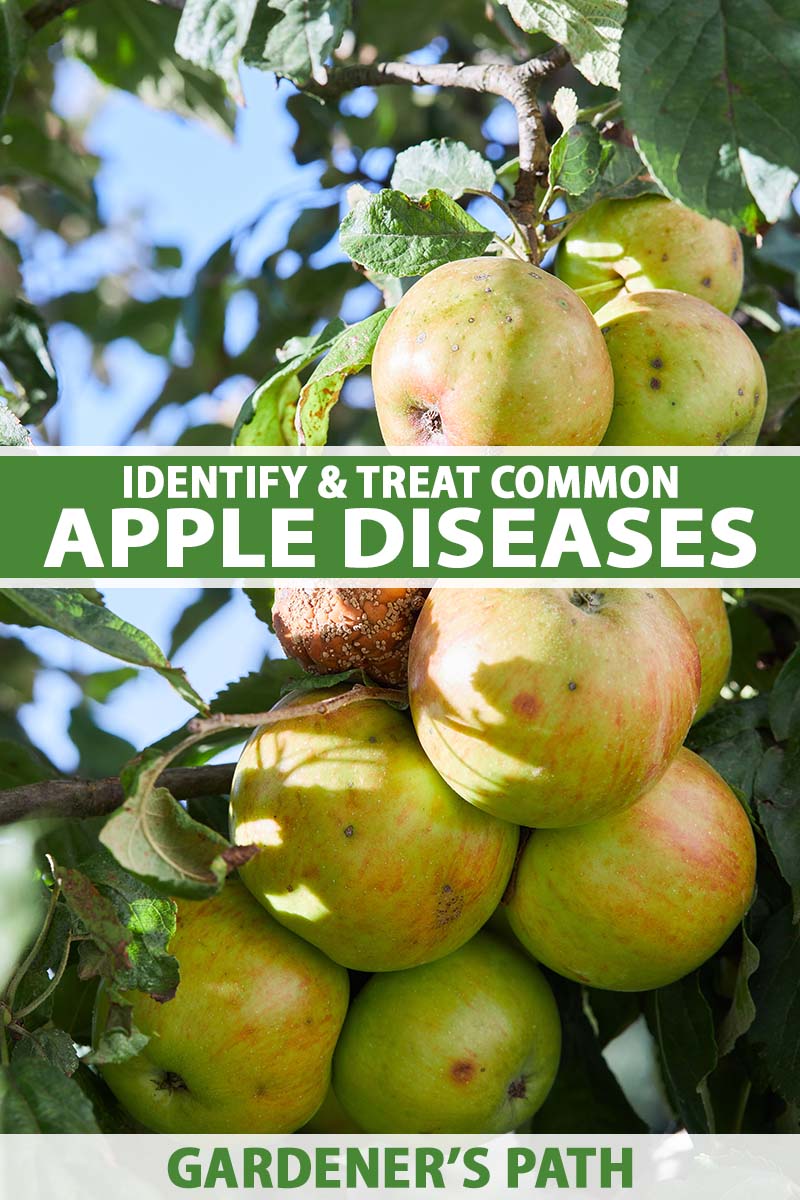
If y'all've e'er seen apple trees growing in the wild, you may already know they are privy to a wide range of diseases. Merely what about homegrown apples?
An apple enjoyed fresh off the tree is delectable, merely yous may have to piece of work hard for your shiny piece of fruit.
Many different types of fungi and some varieties of bacteria can cause infections in a home garden.
Nosotros link to vendors to assistance you find relevant products. If y'all purchase from ane of our links, we may earn a commission .
Your best bet to prevent the onset of disease is to plant varieties that are resistant to the major pathogens in your expanse.
Of course, this advice won't do much practiced if you already have an apple tree, or if symptoms are actually due to a physiological trouble like a nutrient deficiency rather than an infectious ailment.
In this guide, nosotros'll embrace the most mutual apple diseases, how to identify them, and what activeness to have.
Common Apple tree Diseases
- Bacterial Infections
- Crown Gall
- Fire Blight
- Fungal and Water Mold Infections
- Anthracnose Canker and Bull'southward-Middle Rot
- Apple Scab
- Armillaria Root Rot
- Frogeye Foliage Spot and Black Rot
- Phytophthora Crown Rot, Collar Rot, and Root Rot
- Powdery Mildew
- Rust
- Sooty Blemish and Flyspeck
- Southern Blight
- White Rot (aka Bot Rot)
- Viral Infections
- Flat Apple Disease
- Physiological Disorders
- Biting Pit
- Chlorosis
- Cork Spot
- Soggy Breakdown
- Sunscald
- How to Forestall Disease in Your Apple tree Trees
- Practice Good Hygiene in the Autumn
- Sterilize Your Pruning Shears Betwixt Cuts
- Exercise Skilful H2o Management When Planting
Bacterial Infections
In that location are 2 very serious apple diseases caused past bacteria.
One is the more often than not fatal crown gall. The other is the highly contagious fire blight. This is a key disease to be aware of, so that yous can strike quickly at the first sign of infection and have some chance of containing its spread.
Crown Gall
This unusual illness affects a broad array of plants, and the bacteria that cause it may exist found in soils throughout the world.
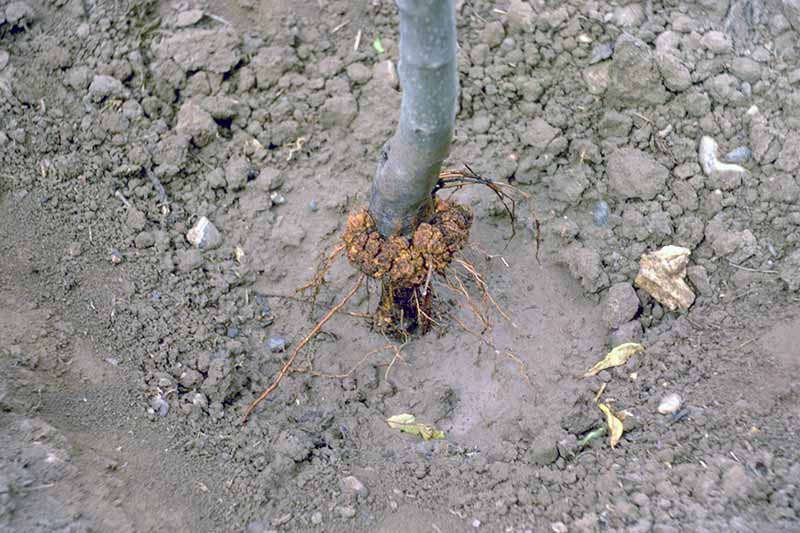
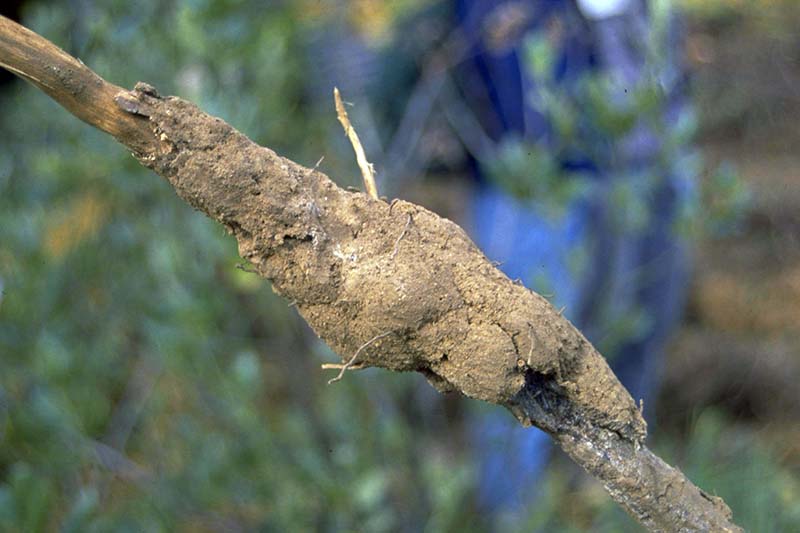
The causal agent is Rhizobium rhizogenes (aka Agrobacterium tumefaciens). This species of leaner genetically engineers plants naturally by changing the institute'due south DNA causing information technology to produce feature galls, which are a type of tumor.
Woolly apple aphids too crusade the production of galls, but you can tell the divergence considering crown galls are non hidden in white cottony wax.
Unfortunately, crown gall on apples is commonly fatal. You can learn more most this disease in our guide.
Burn down Bane
Does your apple tree look like someone ready fire to its tips? If and then, the tree may exist infected with fire bane bacteria (Erwinia amylovora).
This disease is the most severe on new shoots merely can quickly spread to all parts of the tree above ground.
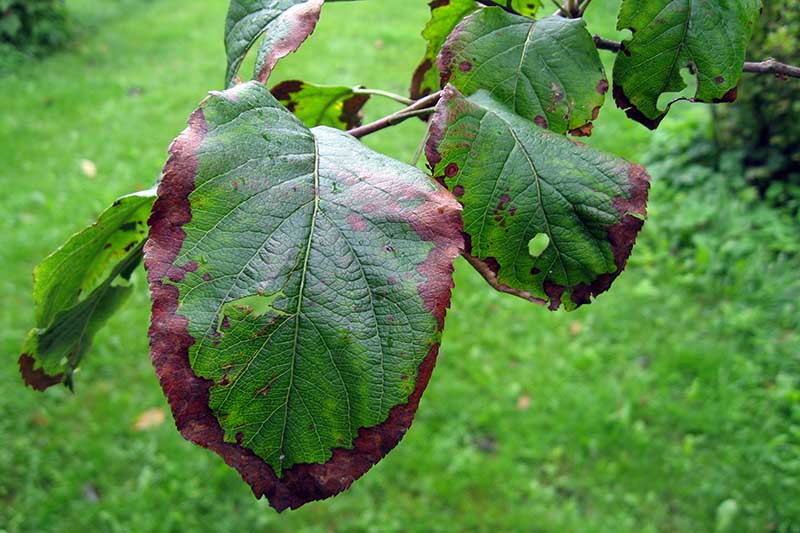
The weather profoundly affects the spread of this disease. Pelting and loftier humidity cause information technology to spread rapidly, and it is peculiarly astringent in temperatures between 75 and 85°F.
When these conditions occur, yous should discontinue overhead irrigation, if using, to try and reduce the amount of moisture on the leaf.
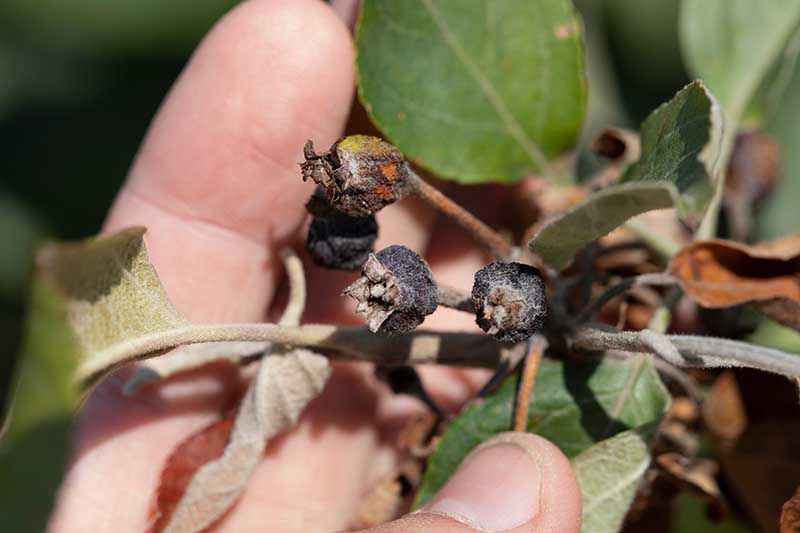
Pruning can get a long fashion toward controlling this disease. You lot can also spray with copper to treat it, but exist careful. Too much copper can damage the fruit or cause the bacteria to get resistant.
Fungal and Water Mold Infections
Unfortunately, apple trees are susceptible to many different fungal pathogens.
And to make things worse, they are also prone to infections by water molds – insidious fungal-similar organisms that live in the soil and thrive under moist conditions.
Nosotros will cover the primary pathogens in this category to help you diagnose and treat your trees.
Anthracnose Canker and Bull's-Heart Rot
Anthracnose canker is a severe illness that most ordinarily occurs in the Pacific Northwest region of the US. This disease is a problem throughout the world – from the UK to Mainland china.
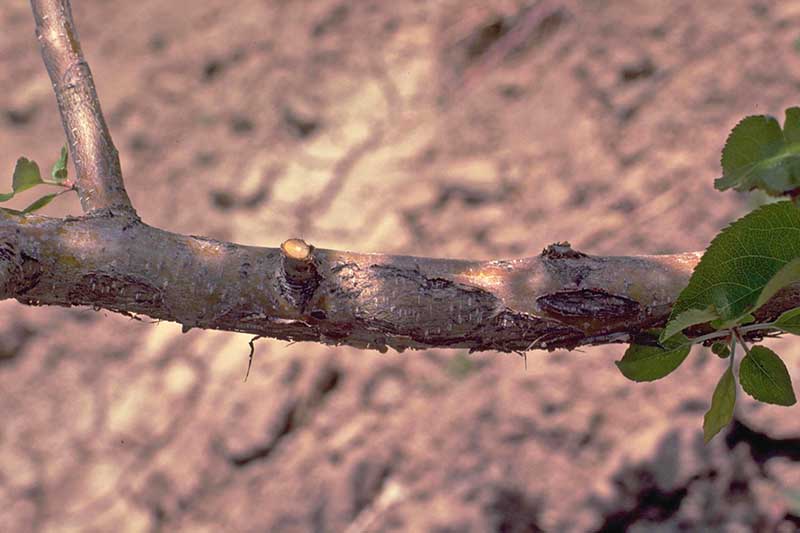
It is caused by different species of Neofabraea fungi (N. malicorticis and Due north. alba) that produce apple cankers that can lead to a fruit infection known every bit bull'due south-eye fruit rot.
The canker phase is considered the most serious, and these can severely damage trees. Commercial growers sometimes have to replace entire orchard blocks to forbid its spread.
The cankers mature in nearly a yr and start producing spores, which infect the fruit and lead to bull's-center rot.
Yous should prune out the cankers, remove stems or even entire copse with heavy canker infections, and burn all affected plant material if this is permitted in your expanse. Since it can be hard to spot all of the cankers, you should as well apply fungicide treatments.
The spores from anthracnose canker can infect the fruit at any point after bloom and throughout the growing season.
Unfortunately, the fruit infections on the tree are latent – or in other words, not detectable – and are merely observed post-harvest, near four to 7 months afterward the fruit have been put in storage.
When Neofabraea infect the fruit, they tin crusade distinct symptoms. N. alba becomes a soft rot with white mycelia, whereas Northward. malicorticis produces sunken, circular, brown lesions.
To control bull's-eye rot, you should apply fungicides before the fall rains, at petal fall, and pre-harvest.
Apple Scab
This serious fungal disease caused by Venturia inaequalis first manifests every bit small lesions on the bottoms of the leaves in the spring.
From there, information technology spreads to the tops of the leaves then to the fruit where it exhibits like footling brown scabs.
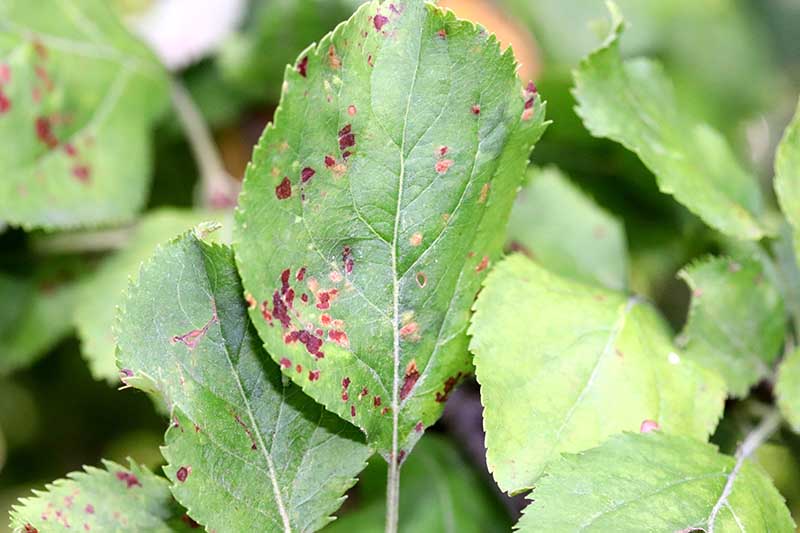
Apple scab can result in total leafage loss by midsummer, which so makes the tree susceptible to other diseases.
While spraying with fungicides in the early spring tin can assistance forbid infestations, this fungus is difficult to control. Exist sure to bag up the previous year's leaves and fruit to prevent the disease from spreading.
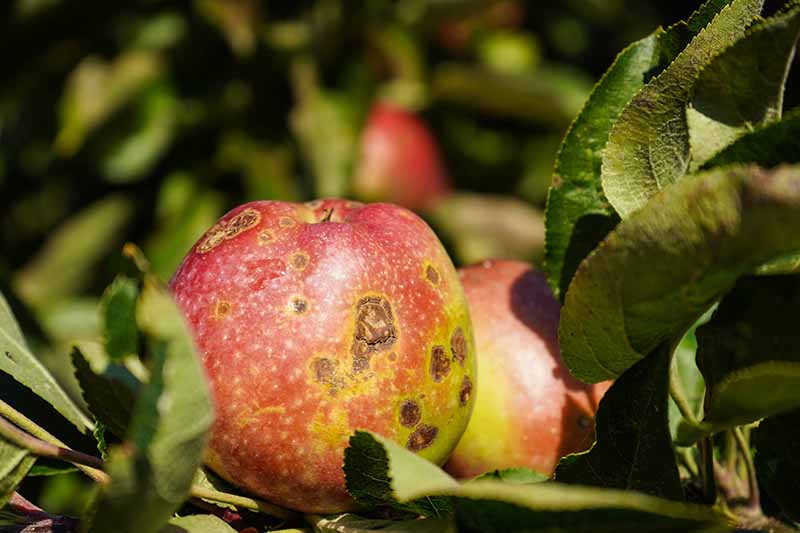
Your best bet to avert this fungal disease is to plant resistant varieties. These include 'Enterprise,' 'Jonafree,' 'Freedom,' 'Pristine,' and 'Williams Pride.'
Unfortunately, 'Cortland,' 'McIntosh,' 'Scarlet Delicious,' and 'Rome Beauty' are all susceptible.
Armillaria Root Rot
In addition to being a fatal pathogen of a large number of copse, shrubs, and woody vines, the claim to fame of Armillaria mellea, the honey mushroom, is that information technology is the largest organism known worldwide.
A colony in Oregon spreads for almost two and a half miles. This species is one of several that have been associated with root rot in eastern deciduous forests.
The broad host range of this fungus bodes poorly for apple trees because fungal inoculum infests small pieces of wood in the soil in the class of mycelia, and these can go on to infect apples.
Infected apple copse have reduced terminal shoot growth, and their leaves may turn purple in the fall much earlier than those of healthy trees. And and then in that location is the symptom that is impossible to miss – the sudden collapse of diseased trees in midsummer.
Mushrooms may besides class at the base of operations of infected trees in late summer or autumn.
In that location is no style to treat an apple that is infected with Armillaria. Every bit with so many other fungal pathogens, prevention is the only way to avoid this mucus.
It is probably pocket-sized solace that honey mushrooms are delicious and safe to eat.
Learn more about how to forbid Armillaria root rot in our guide.
Frogeye Foliage Spot and Black Rot
These ii diseases are caused by the aforementioned fungus, Physalospora obtusa (syn. Botryosphaeria obtusa), simply at different points in its life cycle.
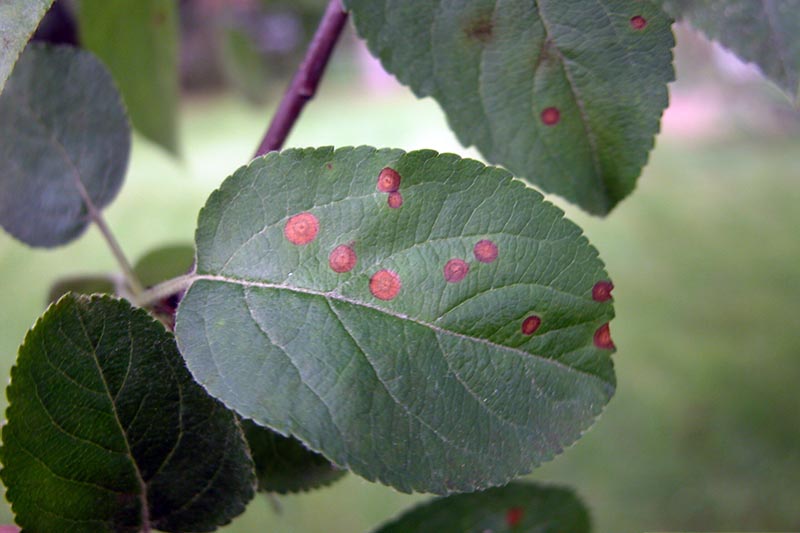
Chocolate-brown spots on the flower ends of the fruit are the commencement sign of infection. These spots will grow into concentric circles and rot the fruit.
The tree's leaves may develop small holes or purplish brown spots that wait similar a frog's eyes. At this point, the illness is known as frogeye leaf spot. Eventually the disease spreads to the limbs and kills the tree past forming cankers – at this indicate it is known as blackness rot.
Yous should immediately prune all the infected parts of the tree and either burn or get rid of them as quickly as possible. Yous may spray with sulfur or an advisable fungicide in the early stages of the illness.
However, by the fourth dimension yous notice the signs of an infection, information technology might be also belatedly for fungicides to make a departure.
Learn more than about frogeye leaf spot and black rot in our guide.
Phytophthora Crown Rot, Neckband Rot, and Root Rot
These diseases are among the most serious ones that touch apples.
They are caused by various species of Phytophthora – close cousins to the organism that caused the Irish potato famine. While once thought to be fungi, these pathogens are at present known every bit oomycetes, or h2o molds.
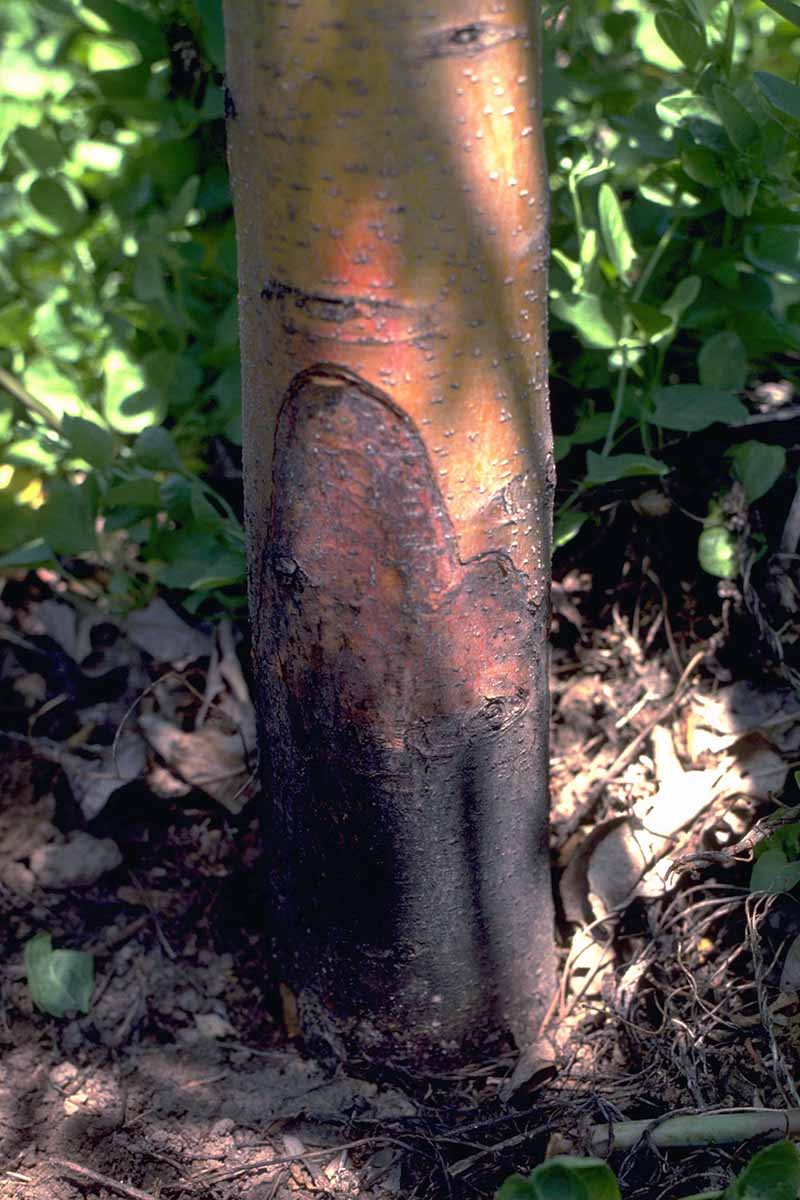
The symptoms of a Phytophthora infection on apples tin can be difficult to distinguish from other problems. The tree may be noticeably less vigorous, and the leaves may turn yellowish.
This group of diseases tin impact unlike parts of the trees. The crown is the indicate where the roots meet the stem, and if that is infected, the disease is called crown rot.
Collar rot takes place at the trunk'south scion portions. In the well-nigh serious cases, the roots will rot.
Infected copse will probably dice, either over a long period, or sometimes even in the aforementioned year they go infected – specially if it is an unusually moisture yr.
Once the soil is infected, it will stay that way. You will exist unable to replant apples in an area that has this type of pathogen present.
On the vivid side, you have some hope of saving your tree if you catch the affliction early enough. You can spray the root zone with mefenoxam or metalaxyl.
Planning ahead and practicing good h2o management when y'all plant your trees can help to prevent their loss from these diseases. For instance, be sure that you plant them in soil that drains well and avoid overwatering.
Powdery Mildew
Many types of powdery mildew pathogens exist, all specialized for different plants. Apple tree has its own type – Podosphaera leucotricha.
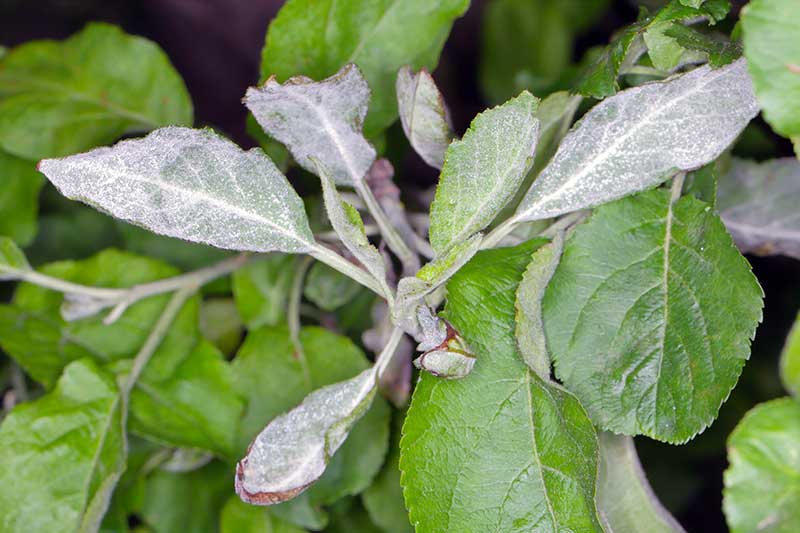
The archetype symptom of powdery mildew is white growth on the underside of the leaves that looks like felt. As the disease gets worse, the tree's growth volition be stunted. Its foliage volition wilt, and the leaves and twigs volition become covered with specks that look similar blackness pinpoints.
Copse are more than resistant to this affliction if they are planted in full sun and have enough space around them for air to broadcast well.
If your tree is showing symptoms, prune whatsoever shoots that are white in the early bound and destroy them. And make sure y'all disinfect your pruning shears afterwards.
Acquire more about how to prevent and control powdery mildew in our guide.
Rust
If your tree has orange or yellow spots on its leaves and fruit that is mottled or distorted, you are probably dealing with rust.
The about common blazon of rust on apples is cedar apple rust caused by the fungus Gymnosporangium juniperi-virginianae.
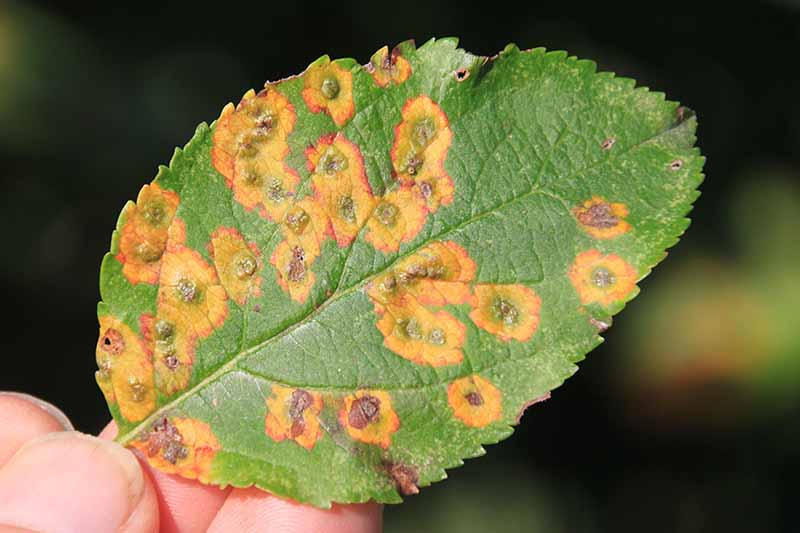
The diseases known as rusts are caused by complicated fungi. They live on some other kind of plant earlier they spread to their final host – apples in this case.
Their alternate host is a kind of juniper known usually as eastern crimson cedar.
Getting rid of eastern red cedar plants on or near your holding will assist foreclose this disease. Yet, the spores can travel for miles, and so that may not be viable.
Yous can spray weekly with fungicide or sulfur to prevent cedar apple rust if you know that the mucus is active in your surface area.
Larn more than nearly cedar apple rust in our guide.
Sooty Blotch and Flyspeck
These are ii different types of disease that ofttimes occur together on the aforementioned nearly-mature fruit.
While all varieties are susceptible to both types of disease, yellow varieties showroom the most astringent symptoms.
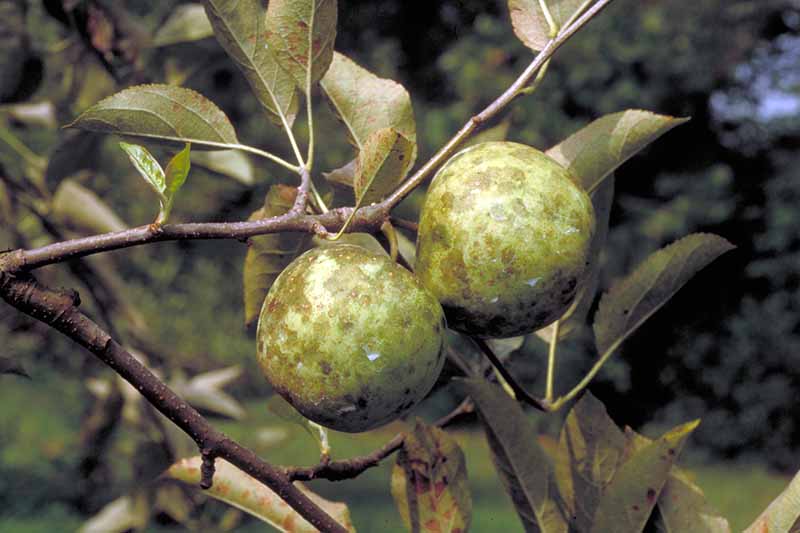
The fungal pathogens involved practice not severely impairment the fruit. It is still edible, but less valuable in the market place and difficult to sell, then information technology can be a major problem for commercial growers.
Sooty blotch, caused by a big number of different fungal species, produces symptoms that you lot would expect from its proper name.
The blotches may be one-quarter inch in diameter or larger and may cover nigh the whole fruit. Y'all can oft rub off the blotches, just commercial growers may need to resort to bleaching if the fruit are infected early in the flavor.
Flyspeck, caused by Zygophiala jamaicensis fungi, also produces symptoms that are reflected in its proper noun. As many as 50 or more than shiny black dots may appear on the surface of the fruit. These are more difficult to rub off than sooty blotches.
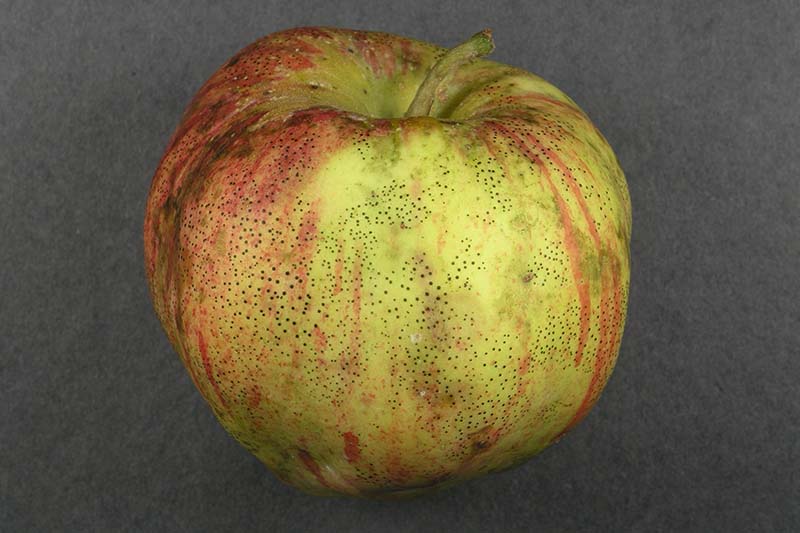
Both diseases tend to occur in clammy shady areas of an orchard. Opening upwards the trees to allow greater air movement will assistance to command these diseases.
Fortunately lawn gardeners do not need to worry much most sooty blemish or flyspeck. The fruit volition be fine to eat if information technology is washed, rubbed, or peeled showtime.
Acquire more about sooty blotch and flyspeck in our total guide.
Southern Bane
The mucus Sclerotium rolfsii tin infect several hundred species of plants, and unfortunately apple tree copse are among them.
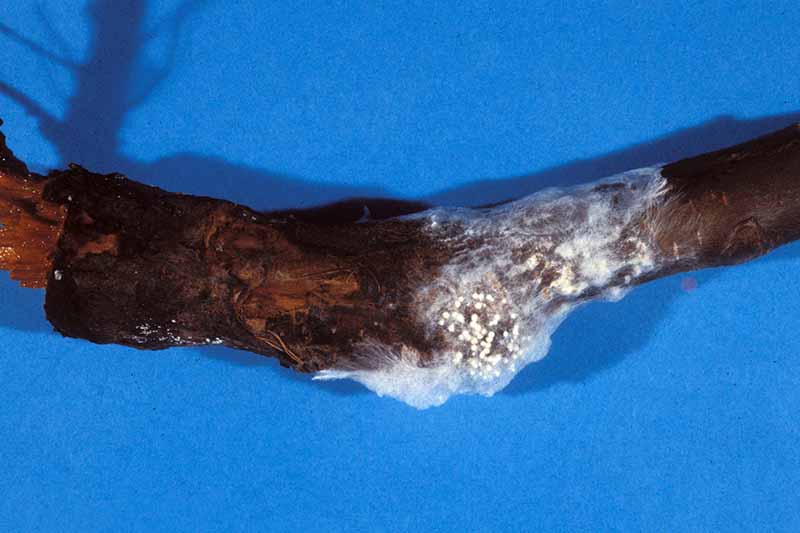
It typically strikes in the southeastern role of the United states and manifests as a weblike white mycelium that oft grows on the bases and lower parts of the trunks of infected trees.
Regrettably, this disease is fatal and usually rapidly kills infected trees. Fortunately apple tree trees go resistant to southern blight as they age, and those that are most severely afflicted are typically one to three years old.
The all-time y'all can hope for is to prevent this nasty affliction when trees are young. Don't plant in locations where southern blight has been known to be severe on previous crops.
And purge organic cloth from around the base of operations of the tree, since it tin serve every bit food for the pathogen.
Acquire more about southern blight in our guide.
White Rot (aka Bot Rot)
White rot is also known equally bot rot, named for the pathogen that causes it, Botryosphaeria dothidea.
For a overnice change of step, the causal agent of this disease is a relatively weak pathogen and infection only becomes a problem when the tree is stressed.
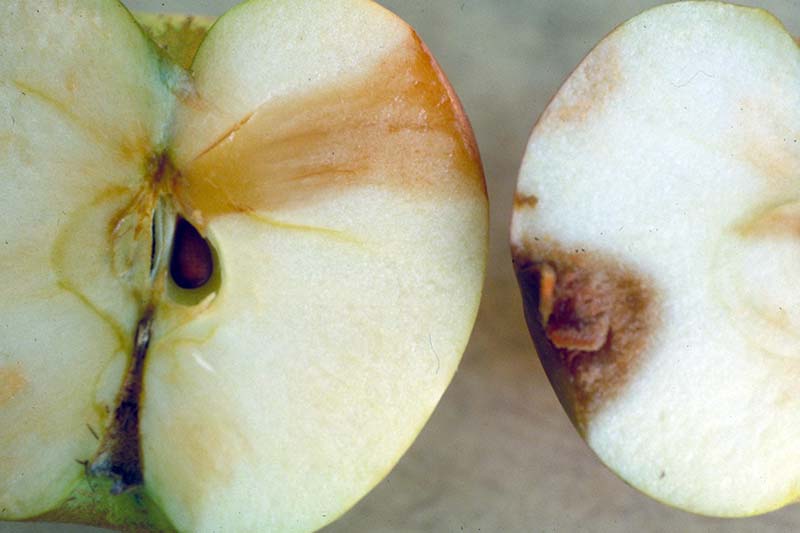
Even so, if it does infect a tree, fruit losses can be heavy. New infections go visible in early summertime, and cankers form on the tree.
It can exist hard to tell them apart from black rot cankers, and so yous may need to have samples of your infected tree tested at a local agricultural bureau to determine which fungus is causing the disease.
Two types of fruit rot tin can develop. The primary one affects the external surface and manifests equally slightly sunken chocolate-brown spots that may accept a red halo around them. If this infection progresses, the entire fruit can rot. The name white rot comes from the second blazon, fruit that tin bleach every bit they decay and plow light brownish.
Since information technology only occurs when the trees are stressed, management includes minimizing stressors like winter injury, h2o stress, insect damage, and other types of illness.
Besides clip whatever expressionless wood on the tree, so the fungus can't grow on it. Be certain and remove any mummified fruit because they are a tremendous source of spores.
You tin can learn more than almost bot rot in our guide.
Viral Infections
At that place is no known cure for apple trees infected with viruses. Therefore, it is of paramount importance to carefully select rootstocks and scion buds that are uninfected.
Most viruses are spread by grafting, so if you lot already accept a tree, there is not much yous tin practice to prevent potential viral infections.
Some other affair to go along in mind is that if you live in an area where nematodes may spread apple viruses, you should take your soil tested for these pests. If they are present, you should choose cultivars and rootstocks that are tolerant – or even ameliorate, resistant – to viruses.
You will besides want to command weeds and limit moving the soil around, so y'all don't inadvertently spread an infection.
Common viral diseases spread by nematodes include the cherry rasp leaf virus (CRLV), which is described below, tobacco ringspot virus, and tomato plant ringspot virus, which causes apple tree union necrosis.
Flat Apple tree Disease
The virus that causes this affliction, known commonly as cherry rasp leafage virus or CRLV, is found in the western U.s.a. and British Columbia.
However, experts are concerned that it could spread to growing regions in the northeast and strongly advise using circumspection when ownership trees, scion buds, or young plants from operations in western states.
CRLV readily infects a large number of mutual orchard weeds, and dagger nematodes (Xiphinema americanum) can spread it betwixt copse, both apple tree and scarlet. One good thing is that nematodes move very slowly, so it takes a while for this disease to spread.
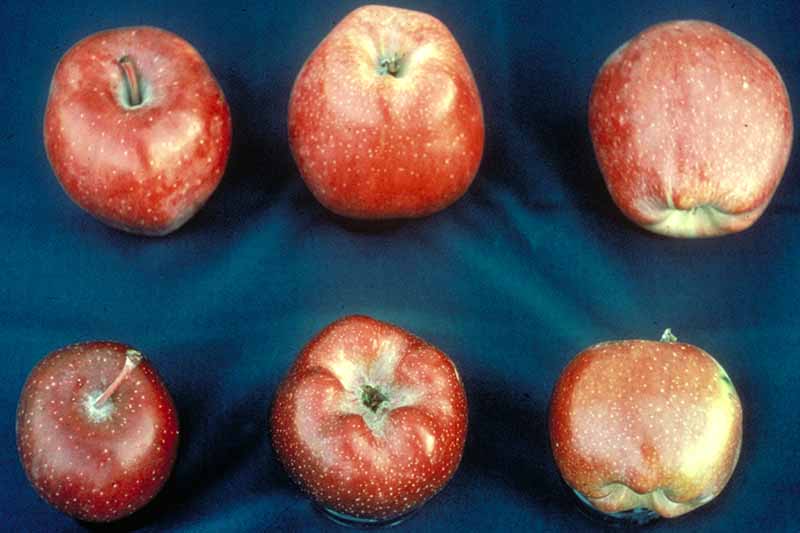
You can tell that your plants have this disease when the fruit becomes flattened from both sides. Some other symptom you may or may not note is leaves that whorl up from the midrib.
As with other apple viruses, there is no available control or cure for this disease. As presently as you detect that your tree is infected with this pathogen, yous should remove it.
Physiological Disorders
Many disorders that appear to be diseases are actually due to problems with the tree or fruit physiology instead, with no active pathogen involved.
A number of factors can disrupt apple production. One mutual crusade is a lack of nutrients due to unfavorable soil pH. Nosotros'll briefly intermission these disorders down according to their symptoms hither.
Biting Pit
The first symptom of bitter pit is small, h2o-soaked lesions on the fruit. These spots volition gradually change to expect like bruises and will eventually get sunken.
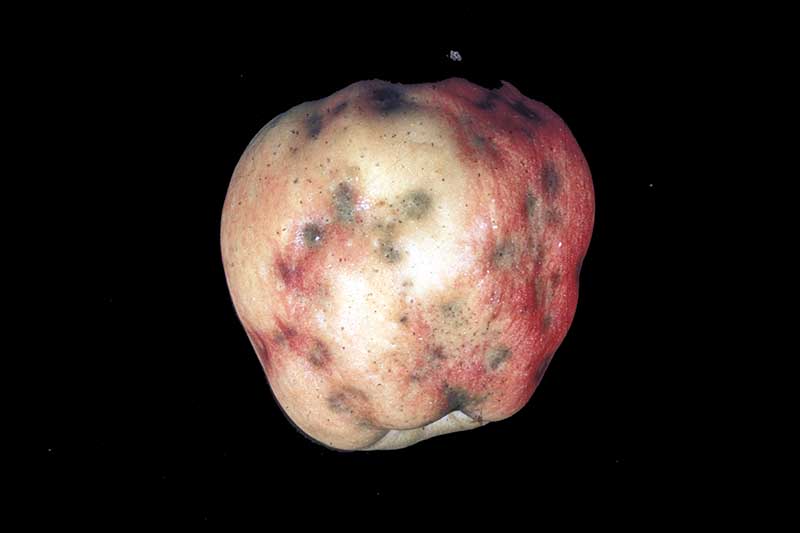
Even though the fruits testify symptoms while on the tree, they volition not become bitter until after harvest.
This is one physiological condition that is not due to soil pH. It appears to happen when calcium becomes full-bodied in the leaves rather than the fruit.
A hot and dry out climate can increase the chances that the fruit will develop bitter pit. The leaves transpire more in a climate such every bit that of New Mexico, and the calcium diverts to the leaves.
At that place is no control bachelor in one case the fruit develops symptoms. Your all-time bet is to avoid excessive use of nitrogen and potassium fertilizer, which tin can cause the tree to grow an abundance of foliage at the expense of fruit.
You may also be able to foreclose this issue past spraying it with calcium chloride or calcium nitrate over the summertime.
Chlorosis
Many types of insects and diseases tin can crusade apple tree leaves to become discolored, a condition known as chlorosis.
If the yellowing occurs throughout the leaves of your tree and is not limited to small patches of xanthous colour, your tree may exist deficient in iron.
The symptoms of this physiological issue include yellowing and even the dying off of leaves. A classic indicator is that the veins stay greenish while the foliage around them turns yellowish. This happens first to young leaves but tin spread to the whole tree.
The problem may not exist that your soil lacks iron, merely rather, it could be that the pH is as well high. This is a item trouble with soils rich in lime similar those in New Mexico.
One way to solve this problem is to add together chelated atomic number 26, although this is just a temporary fix.
Yous may also see symptoms like to those of chlorosis due to iron deficiency when the problem is really due to a lack of acceptable manganese levels.
A soil examination can help you to effigy out which specific deficiency your tree is suffering from.
To solve this condition, you tin can either use an acid-forming nitrogen fertilizer, or apply a foliar spray of manganese sulfate in April, according to the results of your soil test.
Cork Spot
If your apples look like they have insect or hail damage, exist sure to look more closely. A disorder chosen cork spot manifests with these symptoms.
These spots may progress from beingness modest dimples to half-inch-broad corky or soft spots.
Instead of being caused by an organism, these spots are the result of low soil pH that leads to a deficiency of calcium.
This disorder is curable. Y'all tin can add lime to your soil if the pH is below half-dozen.0. Some other thing yous can practise is spray the trees with calcium chloride every ten days until you lot have harvested all your apples.
Learn more than near cork spot in our guide.
Soggy Breakdown
Many people continue their fruit cool during storage to prolong the shelf life of their harvest. All the same, storage at temperatures that are also cold can result in chilling injury.
One such disorder is soggy breakdown, mutual in 'Honeycrisp' apples, in which the flesh tin develop brown rings.
Keeping the fruit at temperatures to a higher place 2ºC (near 36ºF) can minimize the development of symptoms.
Read more well-nigh identifying and treating soggy breakdown here.
Sunscald
Just like people, fruit tin become sunburned. The get-go indication that your fruit are being scalded is when the skin develops yellowish or flushed areas.
These areas will plough dark while the fruit is still on the tree. You should avert these fruit when you lot harvest, considering information technology will not store well. Since this status is not due to an infectious organism, you can dispose of information technology on your compost pile.
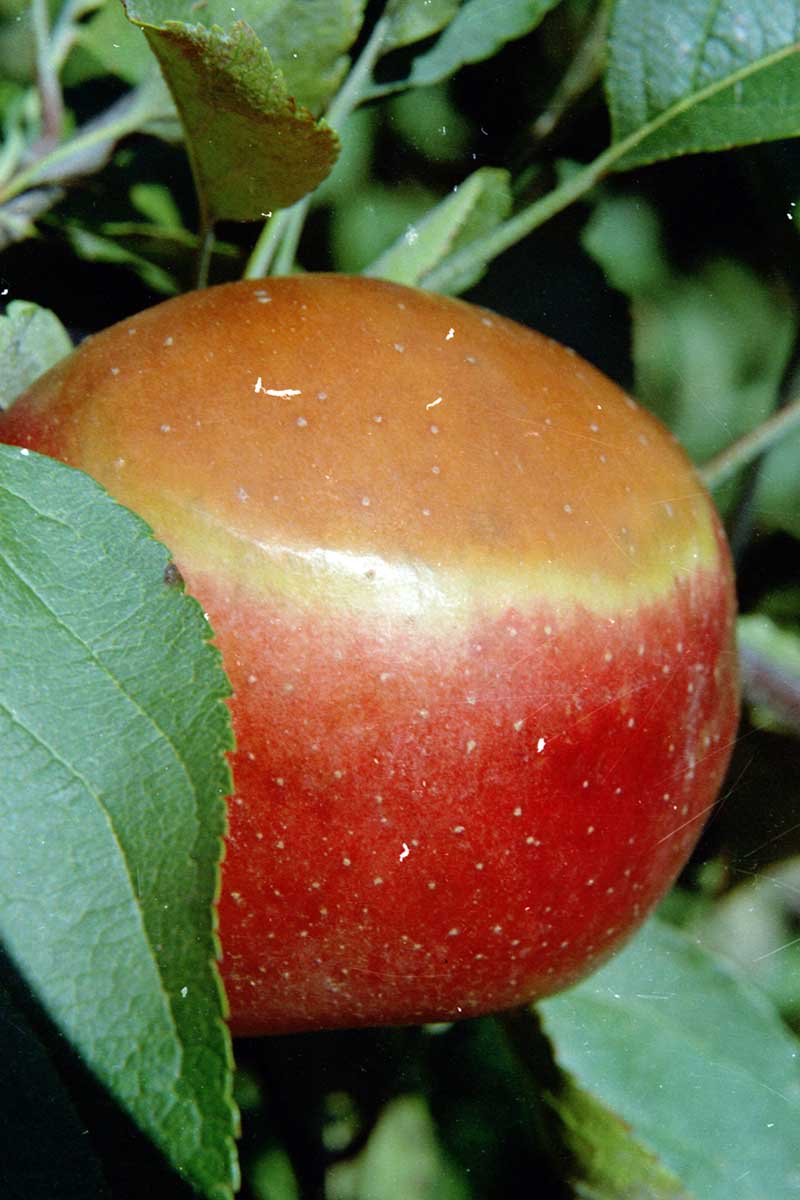
In addition to big areas of the fruit turning yellow, this disorder can announced start as small yellow spots. Nonetheless, information technology is easy to miss them. These spots become much worse when the harvested fruit are in storage.
Yous can manage sunscald with proper pruning or grooming. Some gardeners and farmers use overhead irrigation to absurd the fruit, but that tin can lead to affliction problems, then information technology may exist best to avoid that process.
How to Preclude Illness in Your Apple Trees
Many apple pathogens spread slowly over the course of years and volition non be noticeable until they overwhelm your tree.
Taking measures to prevent illness ahead of fourth dimension can help to keep your apple trees salubrious and disease-complimentary.
Practice Good Hygiene in the Fall
Many of the apple diseases that you may face overwinter in leaves on the footing and fruit that has fallen from your tree.
It is critical that you remove, purse, and throw out these leaves and fruit. Doing this will greatly reduce the numbers of pathogens waiting to assault in the following spring.
And 1 more affair – absolutely practise not add this debris to your compost pile!
Sterilize Your Pruning Shears Between Cuts
When you lot are pruning your tree, sterilize your pruning shears betwixt each cut. If y'all don't, yous take a chance spreading affliction throughout the tree or betwixt trees.
You lot tin sterilize your pruning shears using liquid solutions of 70-95 percent booze or 10-50 percent bleach.
This is peculiarly prudent if yous are cutting dorsum limbs damaged past burn down blight, which is highly infectious.
Practice Skillful Water Direction When Planting
Be sure to provide adequate drainage. Practise not plant in areas that frequently flood, in depression spots, or heavy soils.
Make sure the graft union is positioned well higher up the soil line.
It is critical to keep water from accumulating effectually the tree crowns, or your trees could contract a fatal Phytophthora disease.
Many Mutual Problems May Affect Apples
Apples are decumbent to more than their fair share of diseases, and physiological problems as well. But they're even so deliciously rewarding, once the harvest comes in.
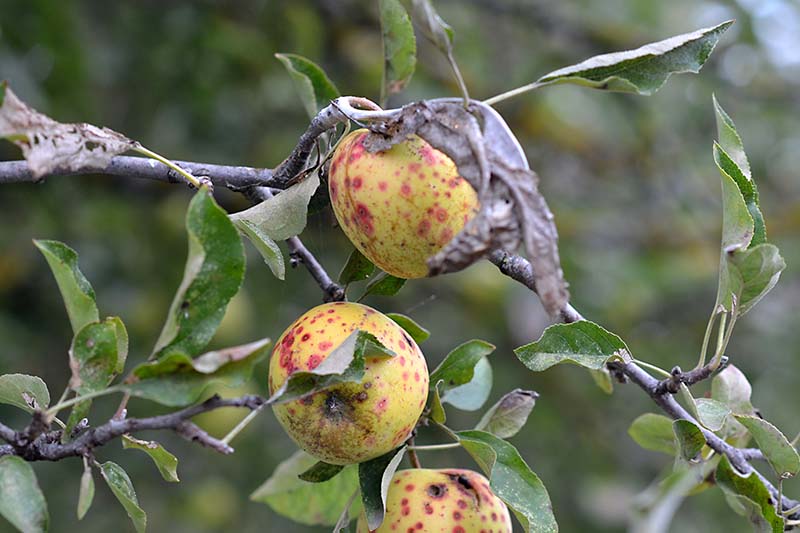
While it'southward piece of cake to say that yous should plant resistant varieties, if you buy a house with an apple tree or two in its yard already, your trees may non be resistant to the local pathogens.
In this case, practicing expert hygiene with leaves and fruit on the ground can become a long way to preventing some nasty problems, along with following all-time practices to maintain adequate airflow, continue an eye on drainage, and properly sanitize pruning tools.
Y'all may have to rely on fungicides to cure your trees of the many types of fungi that can infect them. Merely the pathogens' sensitivity to detail fungicides can vary effectually the land, so check with your local experts to see what to use to care for your copse.
Take you had success rescuing or resurrecting an infected apple tree? Or do yous want to vent almost a tree that you lost? Either fashion, we would love to hear your comments below.
And for more than tips on growing the all-time apples at home, check out these guides next:
- Growing Apple Trees: A Fruitful Primer
- When and How to Harvest Apples
- How to Store Your Apple tree Harvest
Source: https://gardenerspath.com/how-to/disease-and-pests/common-apple-diseases/

Post a Comment for "how to tell what type of apple tree"